
The Science Behind Tesamorelin: Why It's Popular in Metabolic Research

Understanding the unique properties of Tesamorelin, its FDA-approved origins, and its widespread application in visceral adiposity and lipid metabolism research.
Introduction
Tesamorelin is a synthetic analogue of Growth Hormone-Releasing Hormone (GHRH). Unlike many research peptides, Tesamorelin has an established clinical profile - it is the first GHRH analogue to receive FDA approval for the treatment of HIV-associated lipodystrophy (excess visceral fat).
What Is Tesamorelin?
Tesamorelin is a 44-amino acid peptide that mirrors the sequence of endogenous GHRH but with a trans-3-hexenoic acid group at the N-terminus to improve stability. This modification significantly extends its active duration compared to native GHRH.
Mechanism of Action
Tesamorelin binds to GHRH receptors on pituitary somatotroph cells, stimulating the synthesis and pulsatile secretion of growth hormone (GH). The resulting GH elevation stimulates hepatic IGF-1 production, which in turn promotes lipolysis - the breakdown of stored fat.
Tesamorelin and Visceral Fat
Multiple clinical studies have demonstrated that Tesamorelin significantly reduces visceral adipose tissue (VAT). This specific effect on visceral fat makes it a uniquely valuable tool in metabolic research, particularly in models examining lipid accumulation and redistribution.
Research Applications
Beyond visceral fat reduction, researchers are investigating Tesamorelin for its potential effects on cardiovascular risk markers, cognitive function in aging models, and general metabolic health parameters through its GH-stimulating mechanism.
Conclusion
Tesamorelin's clinical validation and well-characterized mechanism make it one of the most scientifically grounded GHRH analogues available for metabolic research. Its selective effect on visceral adiposity continues to generate significant research interest.
Frequently Asked Questions
More in Weight Management
 Hormone Optimization
CJC-1295 vs Ipamorelin: What's the Difference and Why Are They Often Combined?
A comparative analysis of two popular growth hormone secretagogues and the scientific rationale for their synergistic combined use in research protocols.
 Hormone Optimization
Ipamorelin Explained: Why It's One of the Most Popular Growth Hormone Secretagogues
Understanding Ipamorelin's highly selective action on the ghrelin receptor and the reasons behind its dominance in growth hormone secretagogue research.
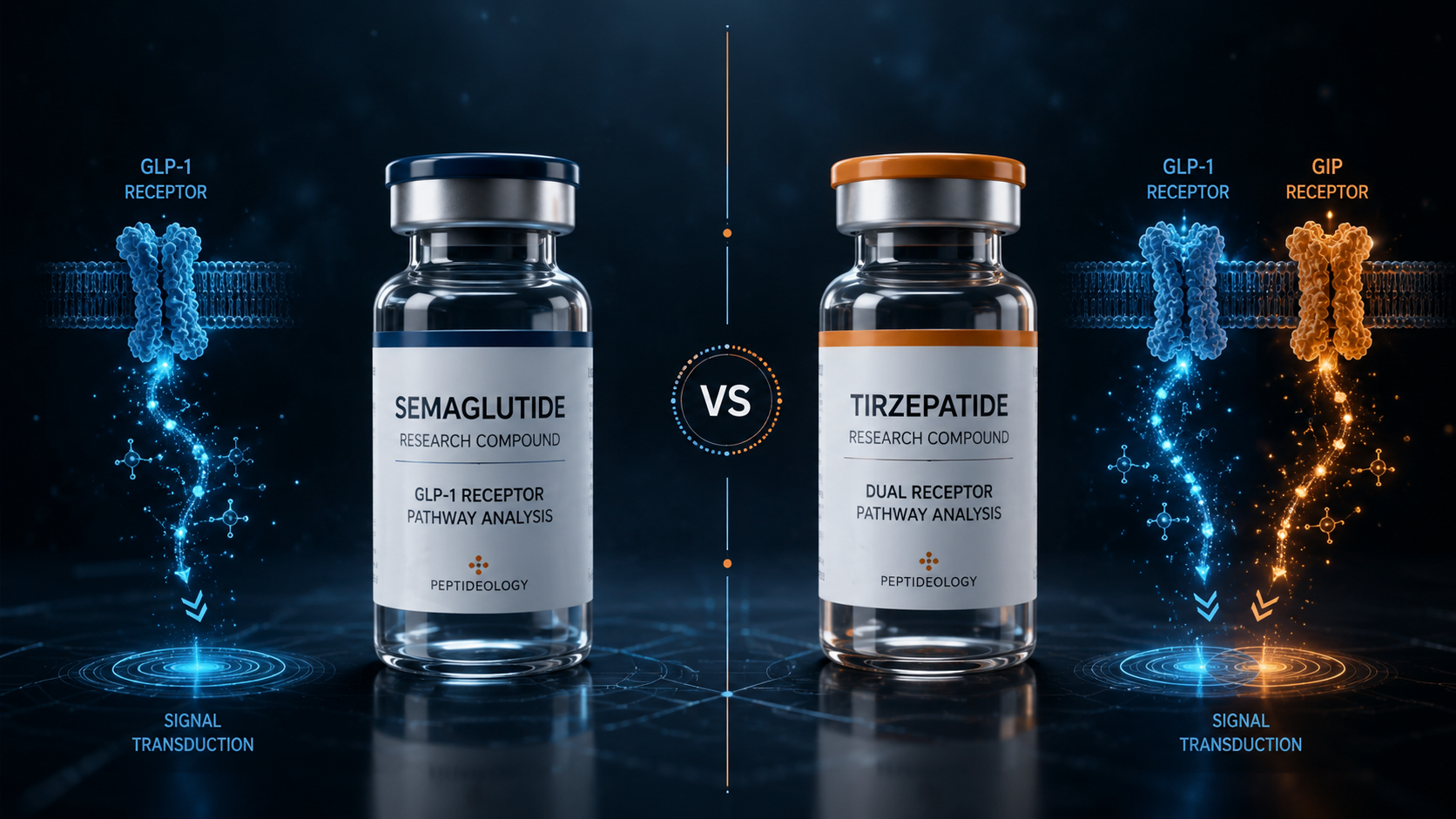 Weight Management
Tirzepatide vs Semaglutide: Understanding the Differences in Weight Management Research
A detailed scientific comparison of dual GLP-1/GIP agonists like Tirzepatide against single-target GLP-1 agonists, exploring mechanisms and research outcomes.