
Peptide FAQ: 50 Questions Researchers Ask Most Often
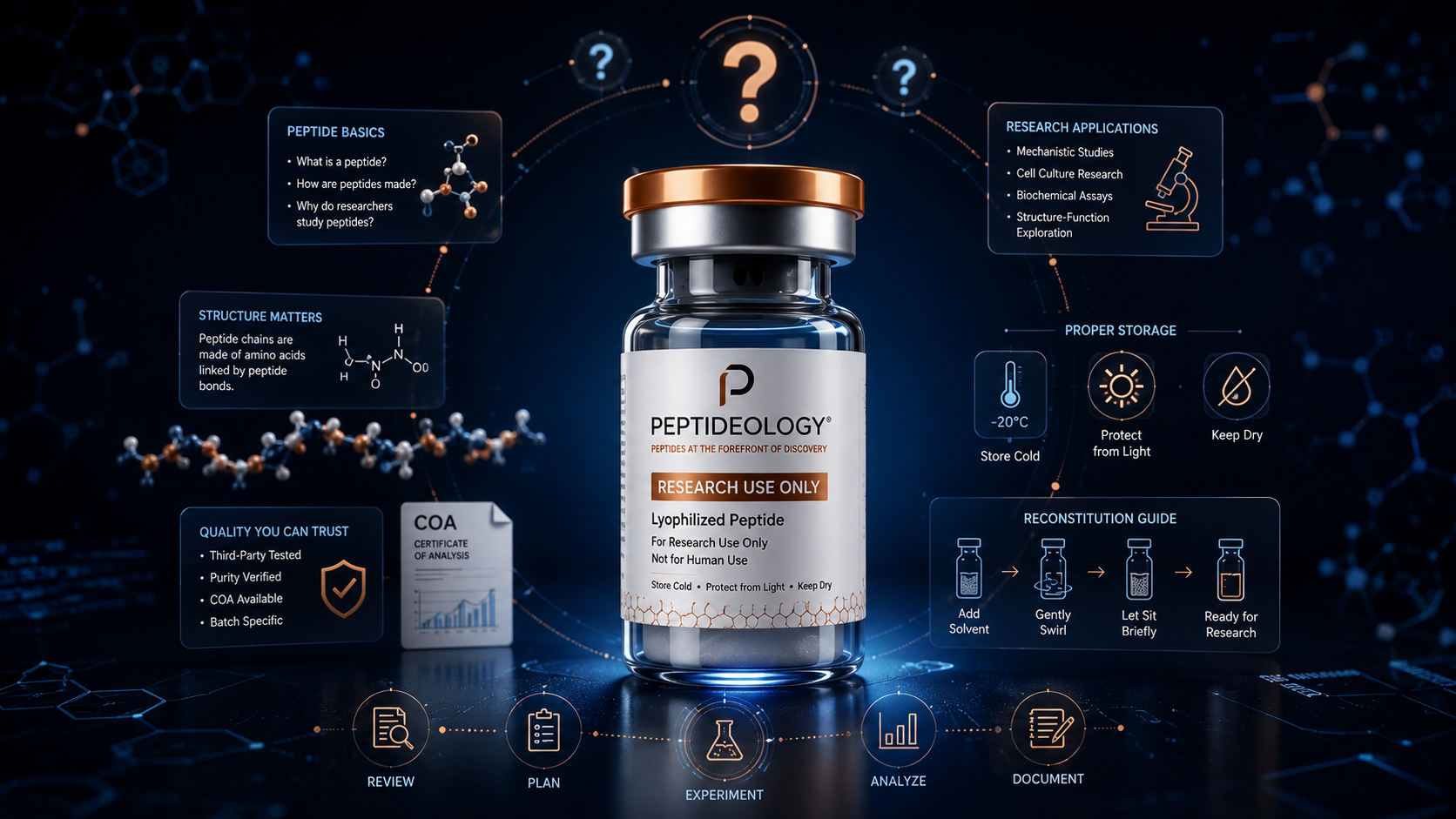
A massive, consolidated reference covering the 50 most frequently asked questions about peptide biology, handling, sourcing, storage, and research protocols.
Peptide Basics (Q1-Q10)
Q1: What is a peptide?
A peptide is a short chain of 2-50 amino acids joined by peptide bonds. When the chain exceeds approximately 50 amino acids, it is classified as a protein.
Q2: How are synthetic peptides made?
Most research peptides are synthesized using Solid Phase Peptide Synthesis (SPPS), a technique that constructs the amino acid chain sequentially while attached to a solid resin support, then cleaves it off for purification.
Q3: What is lyophilization?
Lyophilization (freeze-drying) is a preservation technique where water is removed from a peptide solution under vacuum via sublimation. This produces a stable powder with a dramatically extended shelf life.
Q4: What does ">99% purity" mean?
It means that 99% or more of the material in the vial is the intended peptide compound, with less than 1% being impurities such as unreacted amino acids, synthesis byproducts, or other contaminants. Peptideology products are verified by independent HPLC and Mass Spectrometry analysis.
Q5: What is a COA?
A Certificate of Analysis (COA) is a document from an independent third-party laboratory confirming the identity, purity, and potency of a compound batch. All Peptideology products have batch-specific COAs available.
Q6: What is HPLC?
High-Performance Liquid Chromatography (HPLC) is an analytical chemistry technique used to separate, identify, and quantify components in a mixture. In peptide research, it confirms purity percentages.
Q7: What is Mass Spectrometry?
Mass Spectrometry (MS) identifies compounds by measuring their molecular mass-to-charge ratio. For peptides, it confirms the exact molecular weight, verifying the correct amino acid sequence was synthesized.
Q8: What is a peptide half-life?
Half-life is the time required for the concentration of a compound to reduce by 50%. For peptides, this is primarily determined by enzymatic degradation (proteolysis) and renal clearance. Most unmodified peptides have short half-lives of minutes to hours.
Q9: What does "lyophilized powder" mean on a label?
It means the peptide has been freeze-dried into a powder form. This is the standard form for peptide research compounds as it provides maximum stability during storage and shipping.
Q10: Are synthetic peptides identical to naturally occurring peptides?
Synthetic peptides typically have identical amino acid sequences to their natural counterparts unless they are analogues (modified versions). Modifications may improve stability, half-life, or receptor selectivity.
Storage and Handling (Q11-Q20)
Q11: How should I store an unopened peptide vial?
Unopened lyophilized vials should be stored at -20°C for long-term storage (up to 24 months) or at 2-8°C for short-term access (up to 3 months).
Q12: Can peptides degrade at room temperature?
Yes. Elevated temperatures accelerate hydrolysis and oxidation reactions that break down peptide chains. Minimize room temperature exposure during handling and always return vials to cold storage.
Q13: Does light affect peptide stability?
UV light can oxidize susceptible amino acids (methionine, cysteine, tryptophan). Store all peptides in opaque containers or amber vials, away from direct light sources.
Q14: How long can reconstituted peptides be stored?
Generally 4-6 weeks at 2-8°C when reconstituted with bacteriostatic water. Some peptides are more stable; some less. Always check specific product guidelines.
Q15: Should I freeze reconstituted peptide solutions?
Generally no. Freeze-thaw cycles cause ice crystal formation that can break peptide bonds and cause aggregation. Use bacteriostatic water and refrigerate for the expected research period.
Q16: What happens if a peptide is accidentally left at room temperature overnight?
A short uncontrolled exposure (e.g., 8-12 hours) is unlikely to cause significant potency loss for a lyophilized compound. For reconstituted solutions, longer exposure increases degradation risk. Assess visually and proceed cautiously.
Q17: Why is vacuum sealing important for peptide vials?
Vacuum sealing or inert gas (nitrogen) backfilling prevents oxidation from atmospheric oxygen. These conditions maintain peptide structural integrity over extended storage periods.
Q18: Can peptides be transported on ice packs?
Yes. Standard gel ice packs maintaining 2-8°C are appropriate for shipping. Brief transit periods (24-72 hours) at ambient temperature are typically acceptable for lyophilized compounds.
Q19: How do I know if a peptide has degraded?
Signs of degradation include: cloudiness or precipitation in reconstituted solution, unusual coloration, visible particulate matter, or unusual odor. Structural degradation can only be confirmed by analytical testing.
Q20: Can I store different peptides in the same freezer compartment?
Yes, as long as each is sealed and properly labeled. Keep vials in individual sealed bags or containers to prevent cross-contamination during handling.
Reconstitution (Q21-Q30)
Q21: What is bacteriostatic water?
Bacteriostatic water is sterile water containing 0.9% benzyl alcohol, which inhibits microbial growth. It is the standard solvent for peptide reconstitution in multi-use research vials.
Q22: Can I use sterile water instead of bacteriostatic water?
Sterile water can be used for single-use reconstitution, but lacks preservative. Once opened and used, the vial may support microbial growth. Bacteriostatic water is recommended for research vials used multiple times.
Q23: How do I calculate how much water to add?
Volume (ml) = Peptide amount (mg) ÷ Desired concentration (mg/ml). Example: 10mg peptide at 1mg/ml requires 10ml bacteriostatic water. At 2mg/ml, use 5ml.
Q24: Why should I inject water down the side of the vial?
Directing the solvent stream along the glass wall rather than onto the powder prevents turbulence and air bubble formation. Gentle wetting allows the powder to solubilize naturally without mechanical disruption.
Q25: Why should I never shake the vial?
Vigorous agitation causes air bubbles and mechanical shear stress that can disrupt peptide hydrogen bonding and secondary structure. Gentle swirling achieves dissolution without damaging the compound.
Q26: What if the peptide doesn't fully dissolve?
Allow additional time (10-15 minutes) with gentle swirling. Some peptides require slightly more solvent. Ensure the vial is at room temperature, as cold impairs solubility. If cloudiness persists, consult batch-specific dissolution guidelines.
Q27: Can I use saline for reconstitution?
Normal saline (0.9% NaCl) is compatible with most peptides but lacks the bacteriostatic preservative. It is appropriate for single-use protocols. Avoid it for multi-dosing research applications.
Q28: Is it necessary to use an alcohol swab before drawing from the vial?
Yes. Swabbing the rubber stopper with 70% isopropyl alcohol before each needle insertion is a basic aseptic technique requirement that prevents contamination of the research compound.
Q29: Can I reconstitute in DMSO?
DMSO (dimethyl sulfoxide) is an alternative solvent for peptides with poor aqueous solubility. However, bacteriostatic water is preferred for most standard peptides. Consult peptide-specific solubility data before using DMSO.
Q30: Once reconstituted, can I re-lyophilize a peptide?
Re-lyophilization is technically possible but requires specialized equipment and risks potency loss through the additional processing step. It is not recommended for standard laboratory settings.
Research Protocols (Q31-Q40)
Q31: What are peptide stacks?
Peptide stacks refer to combinations of two or more compounds used together in research protocols, typically because their mechanisms of action are complementary or synergistic.
Q32: Why do researchers combine CJC-1295 and Ipamorelin?
CJC-1295 (GHRH analogue) amplifies the GH pulse while Ipamorelin (ghrelin receptor agonist) generates it. They target different receptor systems, producing synergistically greater GH output than either compound alone.
Q33: What is HPLC purity and how is it verified?
HPLC purity is determined by comparing the area of the target compound peak to all other peaks in the chromatogram. Peptideology verifies purity through independent third-party blind testing, with results provided in each batch COA.
Q34: What is the significance of peptide concentration units?
Peptide concentrations are typically expressed in mg/ml (milligrams per milliliter) or μg/ml (micrograms per milliliter). Consistent, accurate concentration preparation is critical to reproducible research outcomes.
Q35: What is in vitro vs. in vivo research?
In vitro research occurs in controlled laboratory settings (cell cultures, test tubes). In vivo research is conducted in living organisms. Both are used in peptide research; most early mechanistic work is in vitro, while later studies may be in animal models.
Q36: What is a research peptide blank?
A blank is a control sample containing only the vehicle (e.g., bacteriostatic water) without the peptide. Blanks are critical in controlled research to distinguish peptide-specific effects from vehicle effects.
Q37: How is peptide potency determined?
Potency can be assessed via bioassay (biological activity in a cell-based or animal model) or by analytical chemistry methods (HPLC, MS). Purity is a proxy for potency but is not identical to it.
Q38: What does "research chemical" or "research use only" mean?
These designations indicate the product is sold explicitly for laboratory or scientific research purposes only. It is not intended for human or veterinary diagnostic, therapeutic, or clinical use.
Q39: What animal models are used in peptide research?
Common model organisms include C. elegans (nematode), Drosophila (fruit fly), zebrafish, mice (particularly C57BL/6), and rats. Cell-based models include primary cultures and established cell lines.
Q40: Are peptide research data applicable to humans?
Preclinical data provides valuable mechanistic insights, but translation to human outcomes requires rigorous clinical trials. Animal studies do not guarantee equivalent human responses.
Product and Sourcing (Q41-Q50)
Q41: Why does peptide quality vary between suppliers?
Quality depends on synthesis method, purification steps, quality control testing, and storage infrastructure. Sub-standard synthesis produces higher impurity levels. Always demand third-party COAs when sourcing research compounds.
Q42: What should I look for in a peptide COA?
A valid COA should include: compound name and molecular formula, batch number, purity percentage (HPLC), molecular weight confirmation (MS), testing laboratory name, and test date. COAs from in-house labs are less reliable than independent third-party tests.
Q43: Why are Peptideology products more expensive than some competitors?
Premium pricing reflects the cost of true >99% synthesis purity, independent third-party testing, pharmaceutical-grade lyophilization infrastructure, and compliant labeling and storage conditions.
Q44: Does peptide shipping damage the compound?
Properly lyophilized peptides tolerate ambient shipping temperatures for 24-72 hours without significant potency loss. Peptideology ships all products lyophilized to ensure maximum transit stability.
Q45: Can customs seize research peptides?
Customs regulations vary by country and compound. Most standard research peptides are not scheduled controlled substances but may require import documentation in certain jurisdictions. Buyers are responsible for compliance with local regulations.
Q46: What distinguishes a GHRP from a GHRH?
GHRPs (Growth Hormone Releasing Peptides) act on the ghrelin receptor. GHRHs (Growth Hormone Releasing Hormones) act on the GHRH receptor. Both stimulate GH secretion but via distinct receptor systems - this is why they are synergistic when combined.
Q47: What is the difference between a peptide and a protein drug?
The distinction is primarily one of size and complexity. Peptides (<50 amino acids) are smaller, more easily synthesized, and often have simpler structures. Protein drugs (biologics, >50 amino acids) are typically produced via cell culture or fermentation and have complex tertiary structures.
Q48: Are peptides stable in solution?
Peptide stability in solution varies considerably by amino acid sequence. Some peptides are highly stable; others degrade rapidly through hydrolysis, oxidation, or enzymatic cleavage. All Peptideology compounds are provided lyophilized for maximum pre-reconstitution stability.
Q49: What is a peptide analogue?
A peptide analogue is a synthetic peptide that shares structural similarities with a naturally occurring peptide but has been chemically modified - commonly to improve stability, half-life, receptor selectivity, or bioavailability.
Q50: Where can I learn more about specific peptides?
Peptideology's Research Library contains dedicated articles for all major compound categories. For primary research literature, PubMed (pubmed.ncbi.nlm.nih.gov) is the most comprehensive database of peer-reviewed scientific publications.
Frequently Asked Questions
More in Research Guides
 Peptide Basics
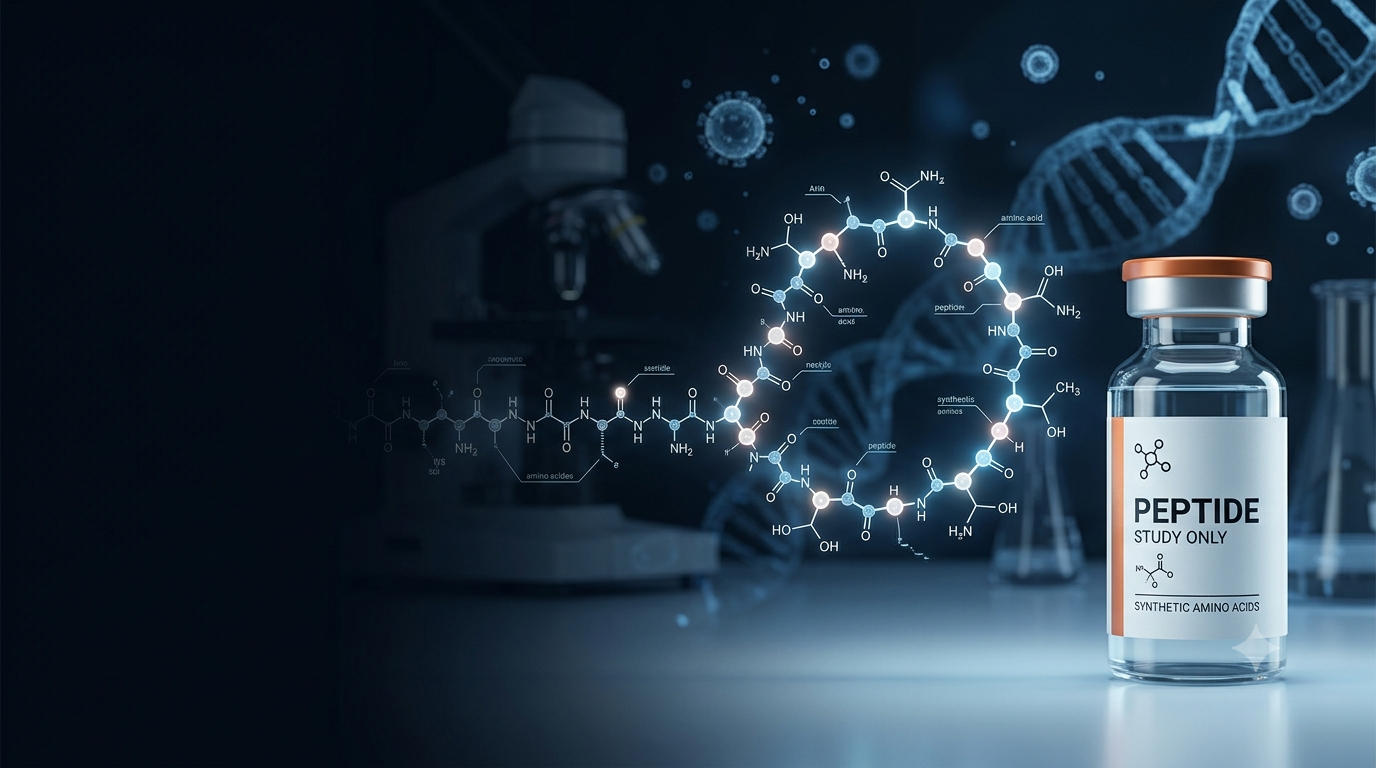
The Complete Beginner's Guide to Peptides: What They Are and How They Work
A foundational overview of peptides — exploring what they are at a molecular level, how amino acid chains form, and how they interact with cellular signaling pathways.
 Storage & Reconstitution
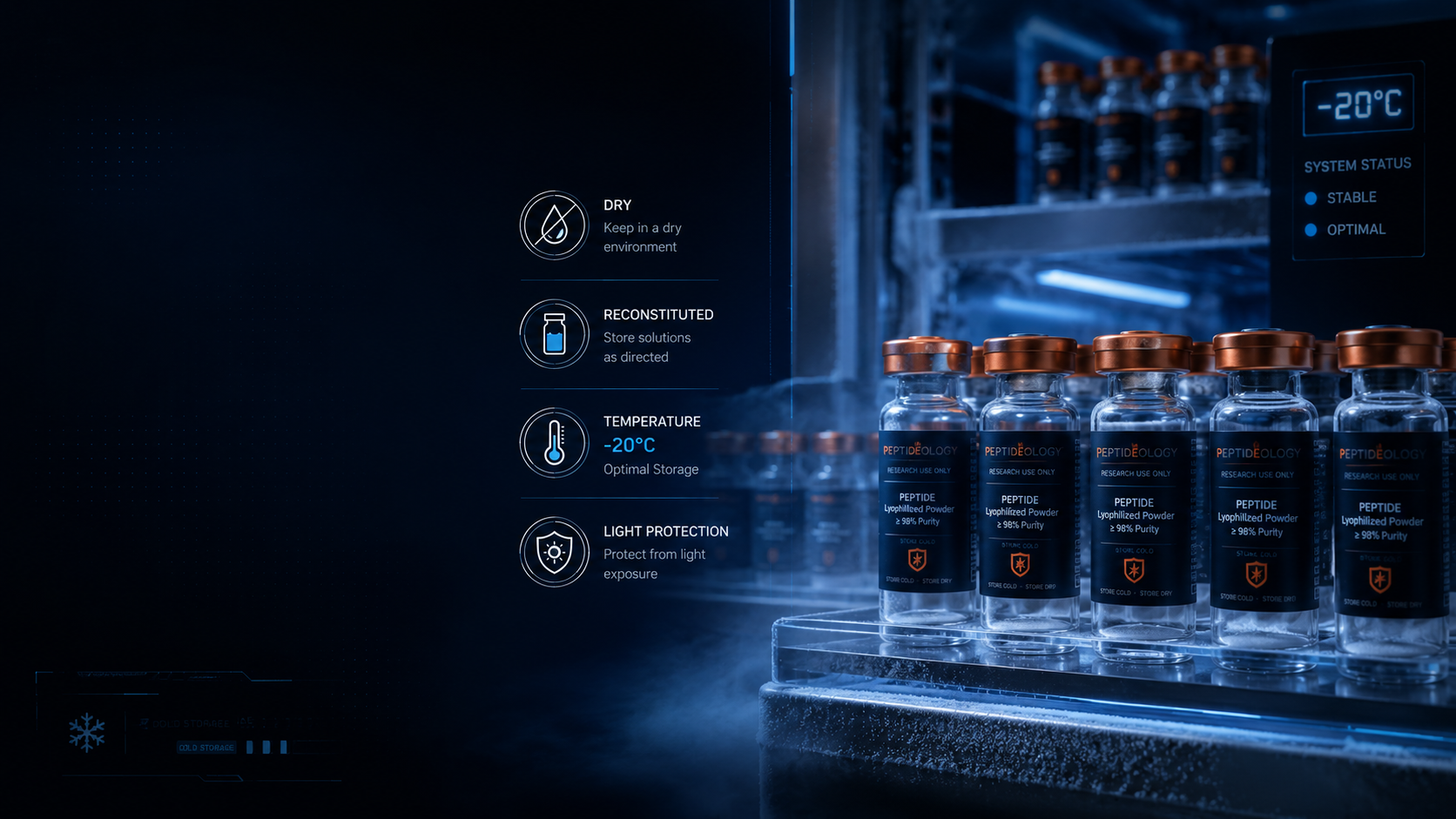
Peptide Storage Guide: How to Store Peptides Properly Before and After Reconstitution
Best practices for maintaining efficacy and stability of lyophilized and reconstituted research peptides - from freezer temperature to light exposure.
 Storage & Reconstitution
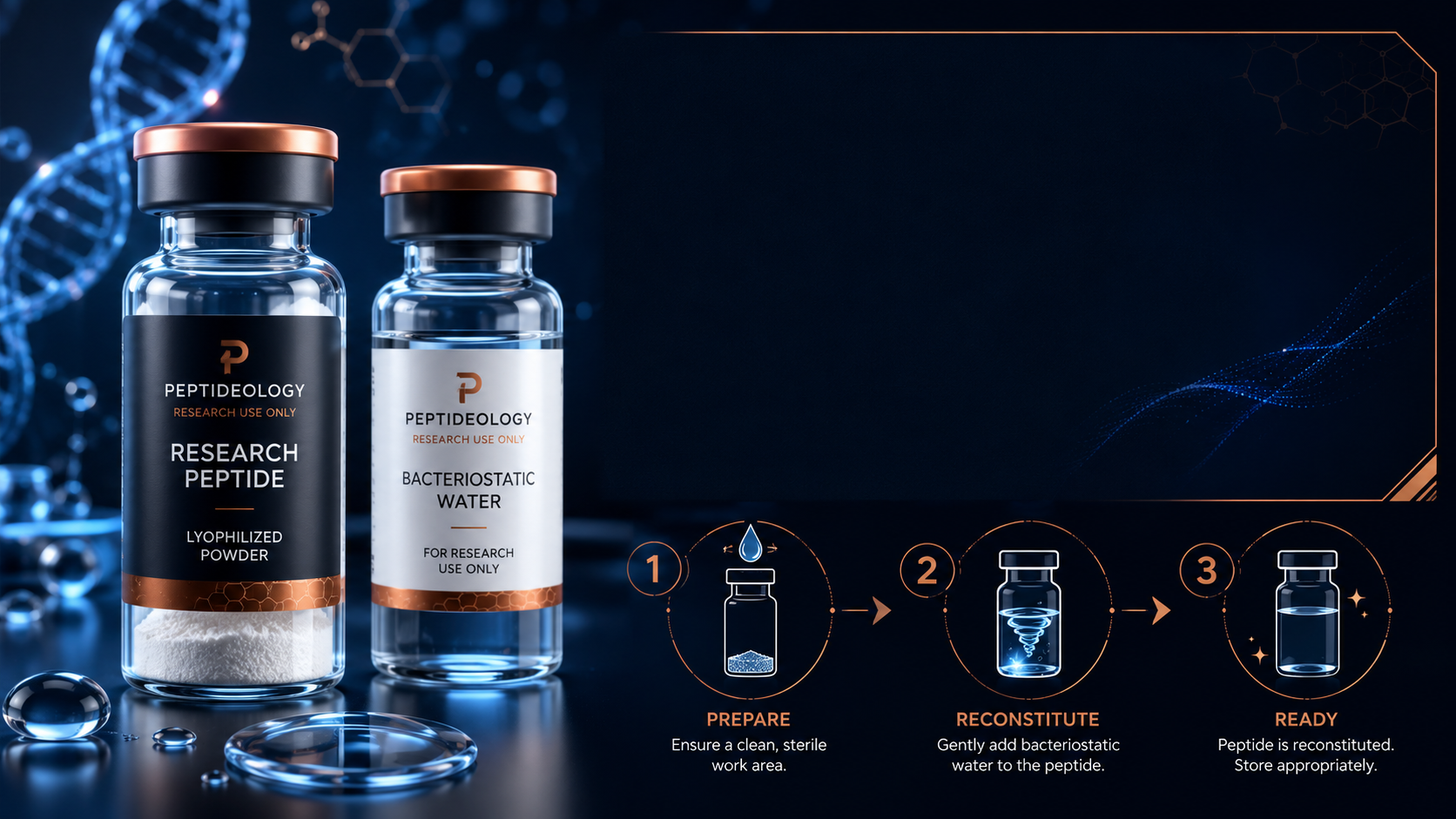
Peptide Reconstitution Explained: A Simple Step-by-Step Guide for Beginners
An essential laboratory guide to mathematically calculating volumes and practically reconstituting peptide vials with bacteriostatic water.