
Peptide Reconstitution Explained: A Simple Step-by-Step Guide for Beginners
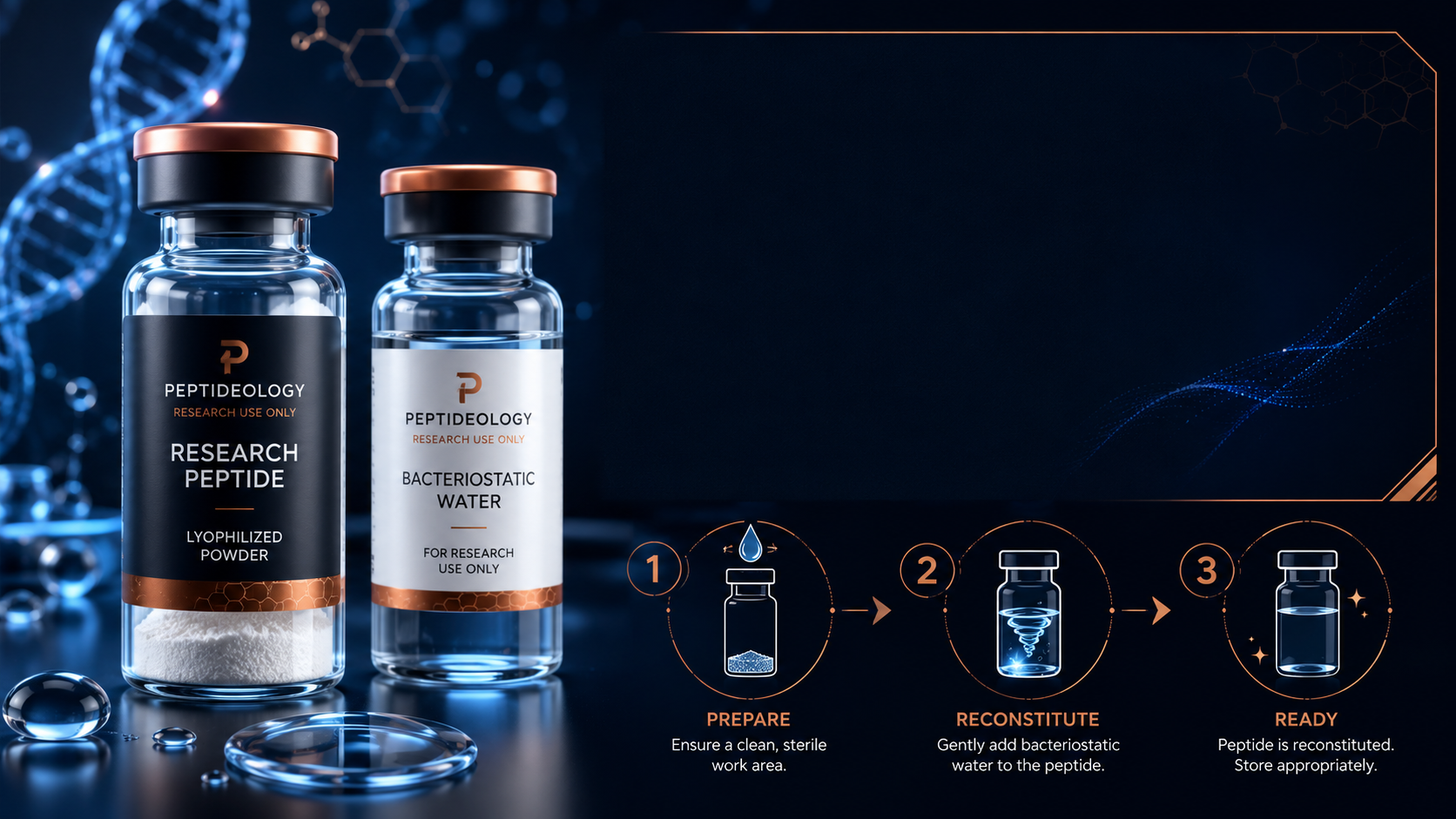
An essential laboratory guide to mathematically calculating volumes and practically reconstituting peptide vials with bacteriostatic water.
Introduction
Reconstitution is the process of dissolving a lyophilized (freeze-dried) peptide powder in a suitable solvent - typically bacteriostatic water - to create a solution suitable for research use. This guide provides a complete protocol for accurate and sterile reconstitution.
What Is Lyophilization?
Lyophilization (freeze-drying) is the gold standard method for preserving peptide integrity during long-term storage. Water is removed through sublimation under vacuum, leaving behind a stable, shelf-stable powder that is highly resistant to degradation.
Required Materials
Standard reconstitution requires: the lyophilized peptide vial, bacteriostatic water (BW), a sterile 1ml or 3ml syringe, 23-27 gauge needles, alcohol prep pads, and a clean laboratory workspace.
Volume Calculation
The most common reconstitution target is 1mg/ml or 2mg/ml concentration. Formula: Volume of BW (ml) = Peptide amount (mg) ÷ Desired concentration (mg/ml). Example: For a 10mg vial at 2mg/ml: 10 ÷ 2 = 5ml of bacteriostatic water.
Step-by-Step Reconstitution Protocol
1. Clean the workspace and wash hands thoroughly. 2. Swab the rubber stoppers of both the peptide vial and BW vial with separate alcohol pads. Allow to air dry (30 seconds). 3. Draw the calculated volume of BW into a sterile syringe. 4. Insert the needle through the rubber stopper of the peptide vial, angling it toward the glass wall. 5. Allow the BW to drip slowly down the side of the vial - never spray directly onto the powder. 6. Remove the needle and swirl (do not shake) the vial gently until the powder fully dissolves. The solution should be clear.
Post-Reconstitution Checks
After reconstitution, visually inspect the solution for: clarity (cloudiness may indicate contamination or incomplete dissolution), particulate matter (discard if visible), and color (most peptide solutions are colorless; some may be faintly tinted).
Conclusion
Correct reconstitution technique is fundamental to research accuracy. The aseptic technique, precise volume calculations, and careful handling described above ensure that peptide compounds maintain their integrity and research validity from vial to protocol.
Frequently Asked Questions
More in Storage & Reconstitution
 Peptide Basics
The Complete Beginner's Guide to Peptides: What They Are and How They Work
A foundational overview of peptides — exploring what they are at a molecular level, how amino acid chains form, and how they interact with cellular signaling pathways.
 Storage & Reconstitution
Peptide Storage Guide: How to Store Peptides Properly Before and After Reconstitution
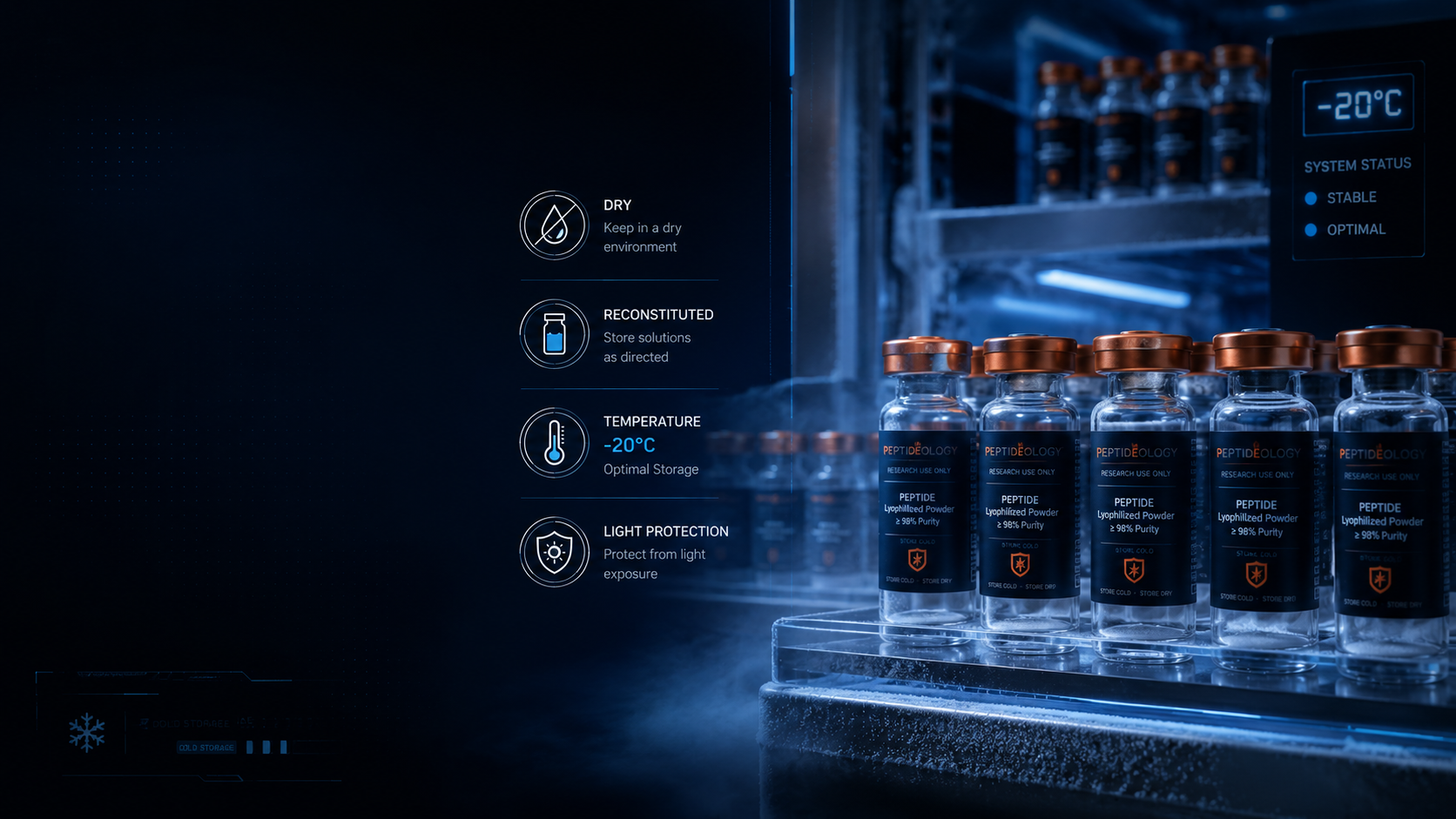
Best practices for maintaining efficacy and stability of lyophilized and reconstituted research peptides - from freezer temperature to light exposure.