
Peptide Storage Guide: How to Store Peptides Properly Before and After Reconstitution
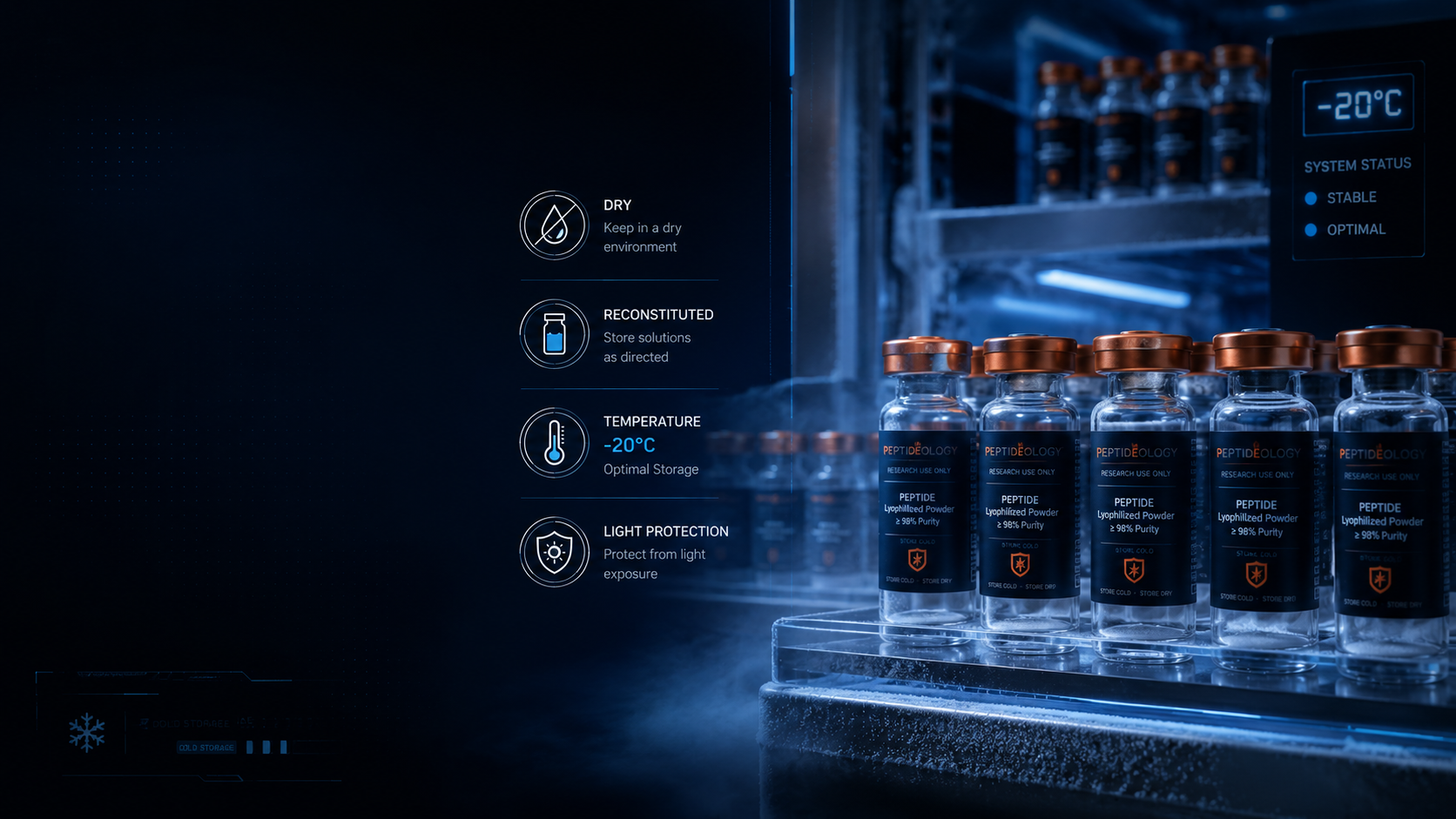
Best practices for maintaining efficacy and stability of lyophilized and reconstituted research peptides - from freezer temperature to light exposure.
Introduction
Proper peptide storage is one of the most critical - and frequently misunderstood - aspects of research protocol integrity. Peptide degradation from improper storage can invalidate experimental results and compromise compound efficacy. This guide covers the complete storage lifecycle from receipt through research use.
Storing Lyophilized Peptides
Lyophilized (freeze-dried) peptides in sealed vials are the most stable form. Because all aqueous solvent has been removed, the risk of hydrolytic degradation is minimal. Most lyophilized peptides can be stored at -20°C for 12-24 months without significant loss of purity.
Temperature Requirements
Peptide storage temperature directly correlates with stability longevity. General guidelines: -80°C for very long-term storage (2+ years), -20°C for standard long-term storage (up to 2 years), 2-8°C (refrigerator) for short-term use (1-4 weeks lyophilized), and room temperature for transit periods only (24-72 hours max).
After Reconstitution
Once a peptide has been reconstituted with bacteriostatic water, it enters aqueous solution. This significantly increases degradation risk. Reconstituted peptides should be stored at 2-8°C and used within 4-6 weeks depending on the specific compound. Never freeze reconstituted peptides unless specifically indicated - ice crystal formation can degrade the peptide chain.
Light and Oxidation Concerns
UV light exposure can cause oxidation of amino acid residues, particularly methionine, cysteine, and tryptophan. Always store peptide vials in opaque containers or amber vials. Limit exposure during use and avoid prolonged room-temperature contact with ambient light.
Common Storage Mistakes
Frequent errors include: storing reconstituted peptides at room temperature, freeze-thaw cycling reconstituted solutions, contaminating stock vials by re-inserting used needles, and using sterile water instead of bacteriostatic water (which lacks a preservative).
Conclusion
Rigorous storage discipline is non-negotiable in high-quality research. Following these guidelines ensures that peptide compounds maintain their structural integrity and research validity throughout their lifecycle.
Frequently Asked Questions
More in Storage & Reconstitution
 Peptide Basics
The Complete Beginner's Guide to Peptides: What They Are and How They Work
A foundational overview of peptides — exploring what they are at a molecular level, how amino acid chains form, and how they interact with cellular signaling pathways.
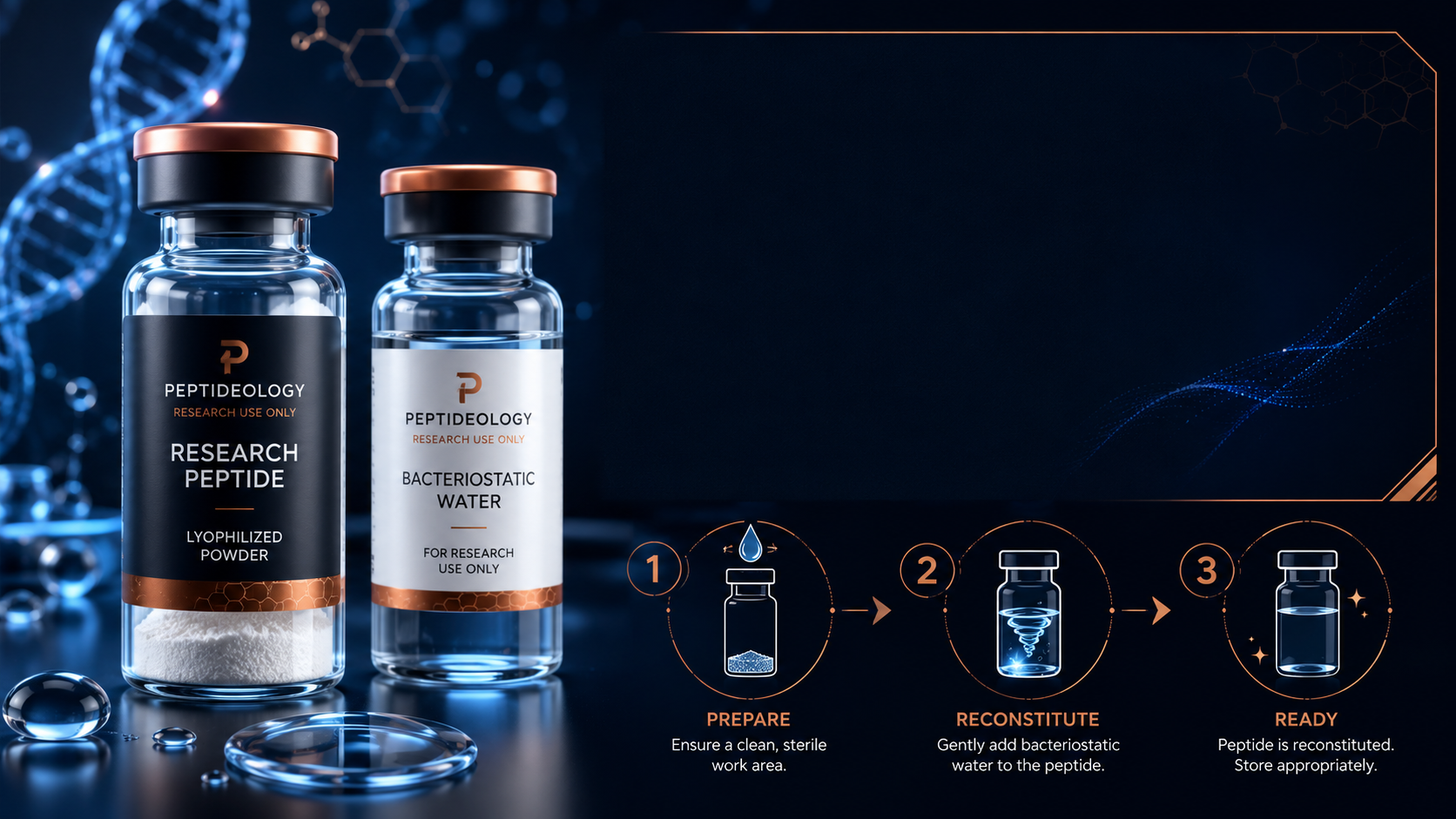 Storage & Reconstitution
Peptide Reconstitution Explained: A Simple Step-by-Step Guide for Beginners
An essential laboratory guide to mathematically calculating volumes and practically reconstituting peptide vials with bacteriostatic water.