
BPC-157 and TB-500: Why This Combination Is One of the Most Popular Research Blends
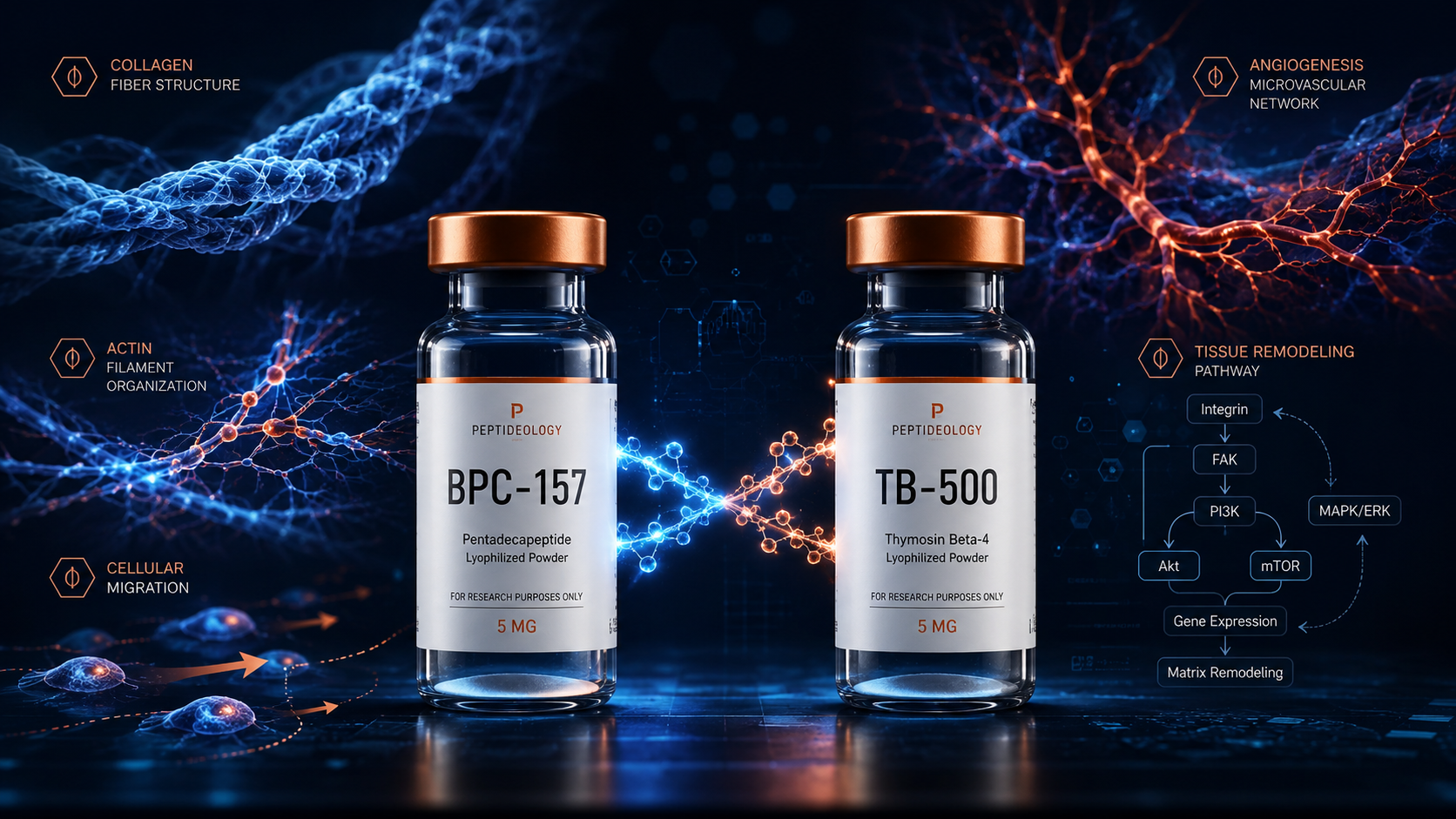
Analyzing the synergistic relationship between BPC-157's angiogenic properties and TB-500's actin-regulating mechanism in tissue repair research.
Introduction
The BPC-157 and TB-500 combination is frequently cited as one of the most studied research blends in the recovery peptide category. Each compound targets distinct yet complementary biological pathways, and their combination is theorized to produce enhanced synergistic outcomes compared to either peptide administered alone.
BPC-157 in Tissue Repair
BPC-157 (Body Protection Compound-157) promotes healing through the VEGF (vascular endothelial growth factor) pathway, stimulating angiogenesis - the formation of new blood vessels. This improved vascularization delivers oxygen and nutrients to damaged tissue, accelerating the repair process.
What Is TB-500?
TB-500 is a synthetic analogue of Thymosin Beta-4 (Tβ4), a naturally occurring protein found in high concentrations at sites of tissue injury. Its primary function is regulating actin - a structural protein critical to cell motility, differentiation, and wound healing.
The Actin Regulation Mechanism
Actin polymerization is essential for cell movement and tissue remodeling. TB-500 binds to actin monomers (G-actin) and sequesters them, promoting cell migration into wound sites, reducing inflammation, and facilitating connective tissue remodeling.
Why They Are Combined
BPC-157 operates primarily through vascular and growth factor signaling while TB-500 acts at the cytoskeletal and cellular motility level. These non-overlapping mechanisms of action make the combination hypothetically more comprehensive than either compound independently - addressing both vascular supply and cellular repair simultaneously.
Research Considerations
The blend is particularly studied in musculoskeletal injury models including tendon tears, ligament damage, muscle fiber repair, and bone fracture healing. Researchers also study its effects on systemic anti-inflammatory properties and recovery time reduction in animal models.
Conclusion
The BPC-157/TB-500 combination exemplifies the power of mechanistic complementarity in peptide research. Its dual approach to vascularization and cellular motility positions it as a leading research blend in the recovery and healing category.
Frequently Asked Questions
More in Recovery & Healing
 Peptide Basics
The Complete Beginner's Guide to Peptides: What They Are and How They Work
A foundational overview of peptides — exploring what they are at a molecular level, how amino acid chains form, and how they interact with cellular signaling pathways.
 Recovery & Healing
BPC-157 Explained: Why Researchers Are So Interested in This Peptide
Dive into the science behind Body Protection Compound-157, its origins in human gastric juice, and its significant potential in tissue repair and regeneration research.
 Recovery & Healing
LL-37 Explained: The Antimicrobial Peptide Researchers Continue to Study
Discover cathelicidin LL-37, a critical component of the human innate immune system, and its broad-spectrum antimicrobial and wound-healing properties under research scrutiny.